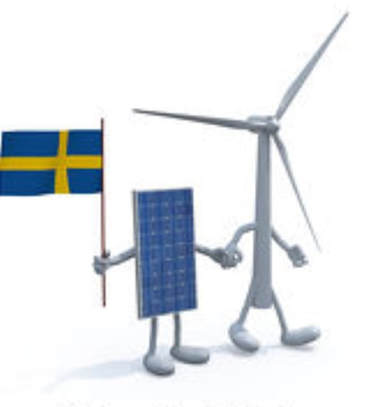
SWEDISH ENVIRONMENT
What makes Sweden’s environment unique?
Sweden is recognized internationally for its environmental policies and natural landscapes.
With extensive forests, lakes, and clean air, the country combines high ecological standards with ambitious goals to reduce carbon emissions and transition to renewable energy sources by 2045.
However, environmental challenges remain, making Sweden’s record complex.
With extensive forests, lakes, and clean air, the country combines high ecological standards with ambitious goals to reduce carbon emissions and transition to renewable energy sources by 2045.
However, environmental challenges remain, making Sweden’s record complex.
How is Sweden investing in renewable energy and sustainability?
Sweden generates a large portion of energy from renewable sources like hydro, wind, and biomass,
Sweden had the best energy system in Europe but over the years the left destroyed it by for example removing many of the nuclear power station.
The country aims to eliminate fossil fuel use by 2045.
Investments in clean technology and research are part of Sweden’s long-term commitment to climate action
Sweden had the best energy system in Europe but over the years the left destroyed it by for example removing many of the nuclear power station.
The country aims to eliminate fossil fuel use by 2045.
Investments in clean technology and research are part of Sweden’s long-term commitment to climate action
Is Sweden doing anything wrong??
1. Sweden is importing trash to burn for electricity instead of recycling that should be the end goal
Sweden's recycling rate has not increased past 50% since 2006 HERE
2. Sweden used to have the best electricity grid in Europe but over the years the left was against nuclear so they removed some power stations without thinking so now many companies in south Sweden cant expand and even the steal companies who wanted to go green can not
Sweden removed a few very important plants in very important places and those plants happened to be medium size nuclear reactors located in southern Sweden, right where demand is highest.
Barsebäck (Skåne) was closed 1999 & 2005.
Ringhals 1 & 2 (west coast, but feeding south grid) closed in 2019–2020.
Together with Barsebäck this meant that southern Sweden lost a big chunk of local, stable electricity, instant power when needed.
Wind power grew a lot and replaced the TWh numbers meaning that on paper it looked like Sweden produced the same amount of electricity but what kind is what matters here
Wind does not replace because its not in the same location, has the same stability, same grid support and the same 24/7 output
On paper “We produce as much electricity as before.”
In reality for the grid operator in Skåne (south Sweden) “I no longer have big power plants here I can rely on when demand spikes.”
So they must import through transmission lines from the north that are more expensive and not always 100% reliable
Take the steel companies in Sweden who want to go green but cant
"Give me 100–300 MW guaranteed always”
That used to be easy to promise when southern nuclear existed but now its complicated and is why it is such a hot political topic now and almost everyone agrees on the diagnosis that Sweden needs more planable, local power in the south near industry."
3. The sami are in conflict with the Swedish state
The Swedish governments usually asks environmental authorities and local municipalities when they need land but never the Sami who are often ignored or consulted too late
Sweden often approves projects piece by piece never taking a holistic look at the cumulative effect on Sami herding whem they take land
Individually each project seems small or manageable but together they leave patches of land that are too small or isolated to support reindeer
Telling the Sami not to worry because we only need this part for mining, this other part for hydroelectric dams and so on but not understanding that you cant just cut how you want in an ecosystem and make the ecosystem unconnected
Also brecause the forest companies are cutting down old growth forests and replacing them with fast growing trees easier to extract for wood
Sami reindeer and their traditional food sources depend on old growth forest ecosystems
Reindeer rely heavily on lichens as a key winter food source during winter.
These lichens take decades to develop and are most abundant in old growth forests, not in newly planted or young commercial timberlands.
The sami has asked many times the companies to only cut down some trees and leave some intact but the forest companies dont respect that
Sweden's recycling rate has not increased past 50% since 2006 HERE
2. Sweden used to have the best electricity grid in Europe but over the years the left was against nuclear so they removed some power stations without thinking so now many companies in south Sweden cant expand and even the steal companies who wanted to go green can not
Sweden removed a few very important plants in very important places and those plants happened to be medium size nuclear reactors located in southern Sweden, right where demand is highest.
Barsebäck (Skåne) was closed 1999 & 2005.
Ringhals 1 & 2 (west coast, but feeding south grid) closed in 2019–2020.
Together with Barsebäck this meant that southern Sweden lost a big chunk of local, stable electricity, instant power when needed.
Wind power grew a lot and replaced the TWh numbers meaning that on paper it looked like Sweden produced the same amount of electricity but what kind is what matters here
Wind does not replace because its not in the same location, has the same stability, same grid support and the same 24/7 output
On paper “We produce as much electricity as before.”
In reality for the grid operator in Skåne (south Sweden) “I no longer have big power plants here I can rely on when demand spikes.”
So they must import through transmission lines from the north that are more expensive and not always 100% reliable
Take the steel companies in Sweden who want to go green but cant
"Give me 100–300 MW guaranteed always”
That used to be easy to promise when southern nuclear existed but now its complicated and is why it is such a hot political topic now and almost everyone agrees on the diagnosis that Sweden needs more planable, local power in the south near industry."
3. The sami are in conflict with the Swedish state
The Swedish governments usually asks environmental authorities and local municipalities when they need land but never the Sami who are often ignored or consulted too late
Sweden often approves projects piece by piece never taking a holistic look at the cumulative effect on Sami herding whem they take land
Individually each project seems small or manageable but together they leave patches of land that are too small or isolated to support reindeer
Telling the Sami not to worry because we only need this part for mining, this other part for hydroelectric dams and so on but not understanding that you cant just cut how you want in an ecosystem and make the ecosystem unconnected
Also brecause the forest companies are cutting down old growth forests and replacing them with fast growing trees easier to extract for wood
Sami reindeer and their traditional food sources depend on old growth forest ecosystems
Reindeer rely heavily on lichens as a key winter food source during winter.
These lichens take decades to develop and are most abundant in old growth forests, not in newly planted or young commercial timberlands.
The sami has asked many times the companies to only cut down some trees and leave some intact but the forest companies dont respect that